Interlude.Compute.Lookup
In Depth
Compute.Lookup(key, lookupKeys, lookupValues, fallback: null)
Maps a field's answer through a lookup table. The keys are matched against the answer's text form.
The inputs are:
key(string) — The field to read.lookupKeys(list of object) — The values to match.lookupValues(list of object) — What each match produces.fallback(object, defaults tonull) — What to produce when nothing matches.
Returns computation — The computation.
Search terms: lookup, map, translate, dictionary, switch.
About the Compute nodes
Values worked out from other answers, for use with Behavior.WithComputed.
A computed field is driven by the form rather than by the user: it recalculates whenever anything it reads changes, in dependency order, so a total built on a subtotal is always consistent. Computed values that depend on each other in a loop are rejected when the form is built, before a window appears.
Example File
An example graph ships beside this page: Interlude.Compute.Lookup.dyn

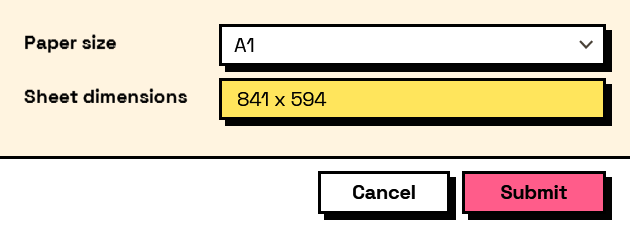
The form it builds: