Interlude.Form.ShowDefinition
In Depth
Form.ShowDefinition(form, trigger: true)
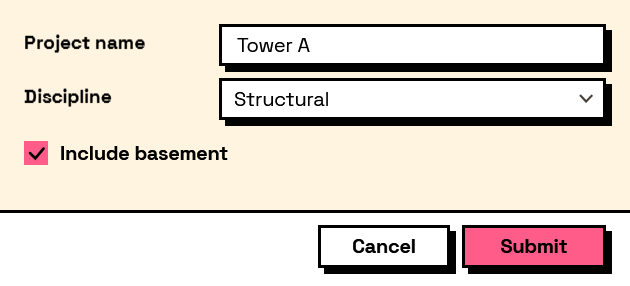
Shows a form that was built with Form.Create or loaded from JSON.
The same dialog as Form.Show, and the same four outputs, differing only in where the form came from: a definition rather than a list of elements. This is the show half of the document workflow — Form.FromJson then this, and a graph runs a form maintained somewhere else entirely.
Everything about re-execution applies here identically: the trigger port, the re-entrancy latch, and remembered answers.
The inputs are:
form(FormDefinition) — The form to show.trigger(object, defaults totrue) — Set to false to skip the dialog and return the last answers.
The outputs are:
values— The answers, keyed by field.wasSubmitted— True when the user confirmed rather than cancelled.buttonClicked— Which button ended the form.form— The full result, for the Result nodes.
Search terms: form, show, definition, json, dialog.
About the Form nodes
Showing a form and getting the answers back.
A note on re-execution, because it surprises everyone once: Dynamo re-runs a graph whenever anything upstream changes, and a node that shows a dialog will show it again. Interlude does not pretend otherwise — it gives you the tools to control it. The trigger port skips the dialog and returns the last answers when it is false, so a form can be gated behind a button or a boolean. A form already on screen is never opened twice: a second execution waits for the first window and returns its result rather than stacking dialogs. And Manual run mode remains the right setting for any graph built around a form.
Example File
An example graph ships beside this page: Interlude.Form.ShowDefinition.dyn

The form it builds: