Interlude.Theme.WithColors
In Depth
Theme.WithColors(theme, background: "", foreground: "", surface: "", border: "", error: "")
Replaces individual colours in a theme's palette. Every colour left empty keeps the value it already had.
The inputs are:
theme(ThemeDefinition) — The theme to adjust.background(string, defaults to"") — Window backdrop, as hex.foreground(string, defaults to"") — Main text colour, as hex.surface(string, defaults to"") — Panels and cards, as hex.border(string, defaults to"") — Control outlines, as hex.error(string, defaults to"") — Validation colour, as hex.
Returns theme — The adjusted theme.
Search terms: theme, palette, colors, colours, brand, override.
About the Theme nodes
How a form looks. Feed the result into Form.Show's theme port.
A theme is applied to the form's own window and nowhere else. Interlude runs inside Revit and inside Dynamo, and restyling a host application from a package would be an unwelcome surprise no matter how good the styling was.
Example File
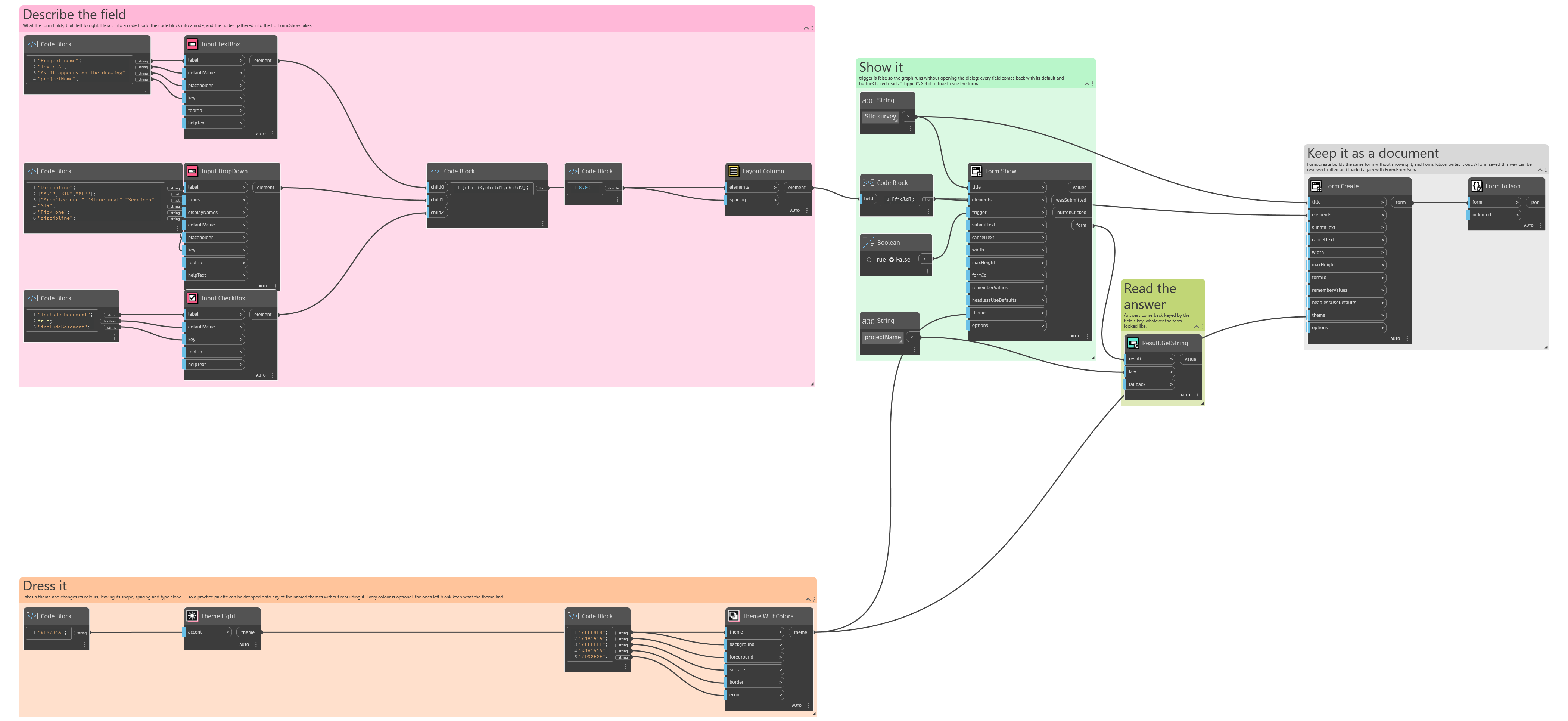
An example graph ships beside this page: Interlude.Theme.WithColors.dyn
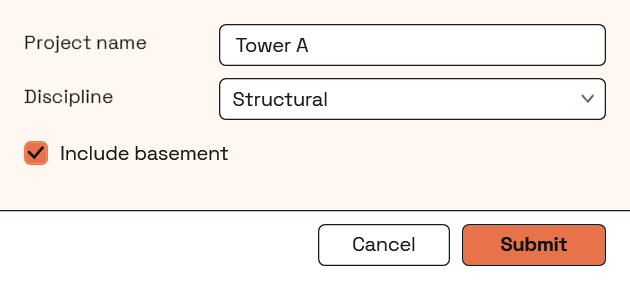
The form it builds: