Interlude.Result.ValueByKey
In Depth
Result.ValueByKey(result, key, fallback: null)
The raw answer for a field, exactly as the form produced it.
The escape hatch. Every other node here promises a type; this one promises nothing and hands over whatever is there — which is what you want for a choice input holding Revit elements, where converting to anything would lose them.
For everything else prefer the typed accessors. Result.GetNumber on a field the user left empty gives you the fallback you chose; this gives you whatever emptiness looked like, and the node three steps downstream is where you find out.
The inputs are:
result(object) — The values dictionary or the form output of Form.Show.key(string) — The field to read.fallback(object, defaults tonull) — Returned when the field is missing.
Returns value — The answer.
Search terms: value, get, key, read, answer.
About the Result nodes
Reading a form's answers.
Every node here accepts either the values dictionary or the form output of Form.Show, so it does not matter which one is to hand. They exist so a graph can say what it expects — a number, a date, a colour — rather than pulling an object out of a dictionary and hoping. Each one takes a fallback used when the field is missing or empty, which is what keeps a downstream node from receiving a null it was not expecting.
Example File
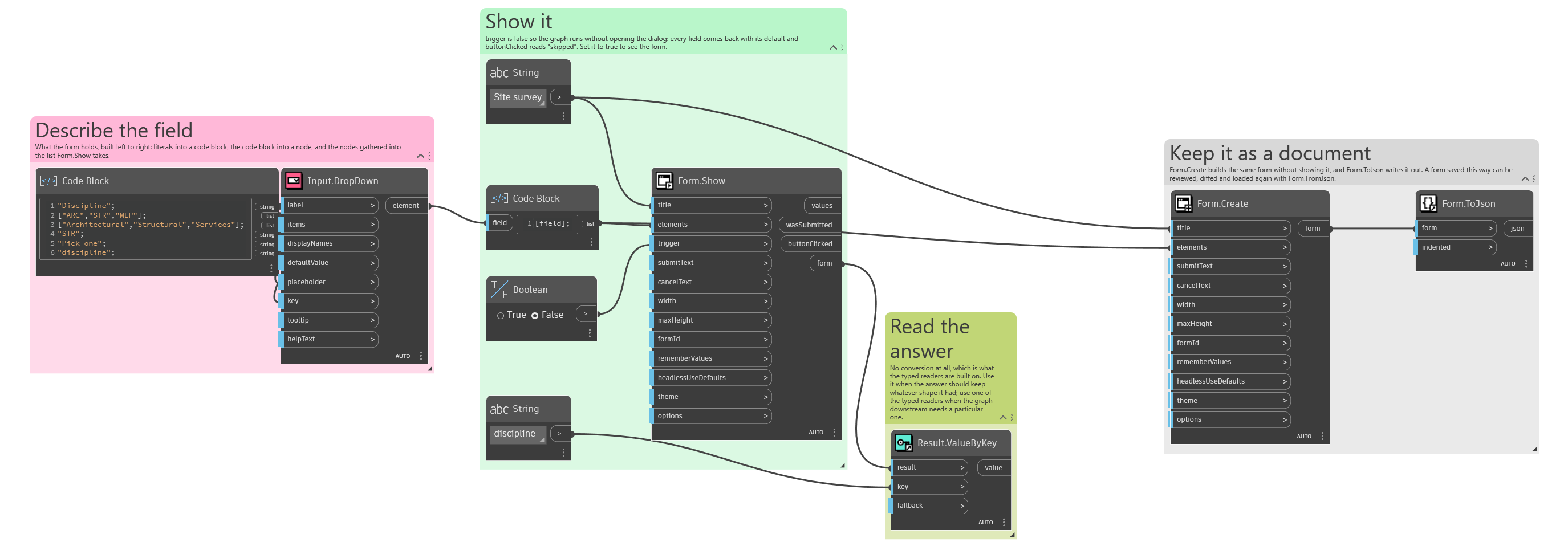
An example graph ships beside this page: Interlude.Result.ValueByKey.dyn
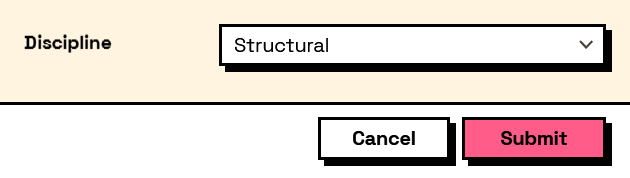
The form it builds: