Interlude.Result.Values
In Depth
Result.Values(result)
Every answer, in the same order as Result.Keys.
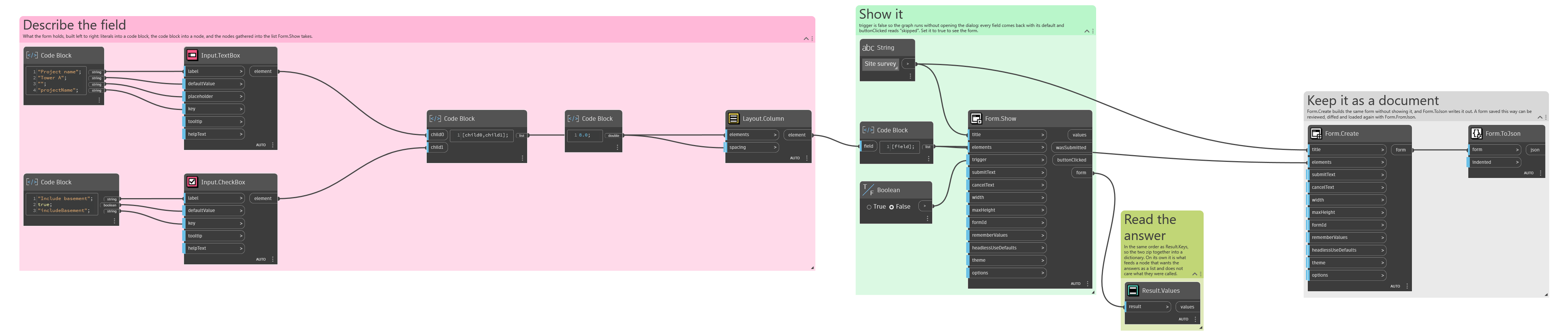
The two lists line up index for index, so zipping them gives name-and-answer pairs — which is how you write every answer to a parameter, or a log, without naming the fields one by one in the graph.
The answers come back as they are, untyped, so a graph that needs a particular type should name the field and use the accessor for it.
The inputs are:
result(object) — The values dictionary or the form output of Form.Show.
Returns values — The answers.
Search terms: values, answers, list.
About the Result nodes
Reading a form's answers.
Every node here accepts either the values dictionary or the form output of Form.Show, so it does not matter which one is to hand. They exist so a graph can say what it expects — a number, a date, a colour — rather than pulling an object out of a dictionary and hoping. Each one takes a fallback used when the field is missing or empty, which is what keeps a downstream node from receiving a null it was not expecting.
Example File
An example graph ships beside this page: Interlude.Result.Values.dyn
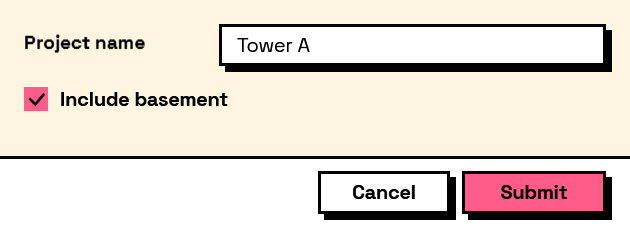
The form it builds: